


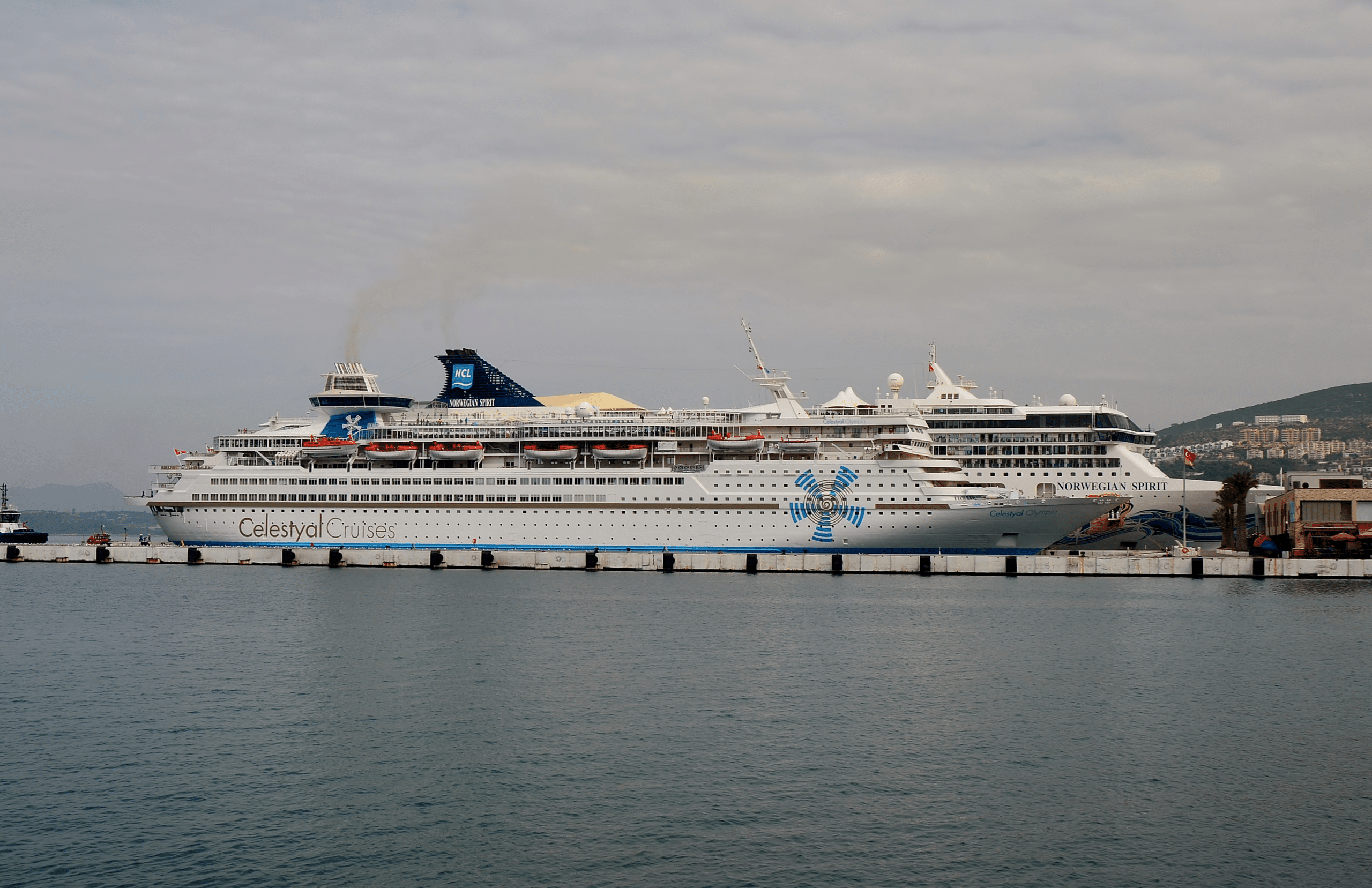
Planning Ephesus from Kusadasi cruise port? This guide explains your real port-day window, ship excursion vs private tour options, and itinerary choices by schedule.
Can I visit Ephesus independently from the Kusadasi cruise port?
Yes. You can reach Ephesus by taxi in about 25 minutes, or by public minibus with a transfer via Selcuk. Both options work, but independent travelers carry full responsibility for timing, entrance tickets, guiding, and returning to the ship on time. A private tour removes most of that planning pressure.
Is the ship’s Ephesus excursion better than booking a private tour?
Not necessarily. Cruise line group excursions usually involve larger groups, fixed routing, and sometimes shopping stops that reduce your time inside Ephesus. Depending on group size and inclusions, a private licensed tour can offer better value through pacing, flexibility, site time, and return-buffer planning.
How much time do I actually have for Ephesus on a port day?
Most ships dock in Kusadasi for 8–10 hours, but your usable touring window is shorter. Allow about 25 minutes each way for transfer, plus a safe return buffer before all-aboard time. Depending on your ship schedule, you usually have 3 to 6 practical touring hours.
Your Port Day in Numbers: The Time You Actually Have
Most cruise ships dock in Kusadasi between 07:00 and 09:00 and depart between 17:00 and 20:00. On paper, that looks like a generous day. In practice, once you factor in transfer time, site logistics, and a safe return buffer before your ship’s all-aboard time, the usable window is considerably shorter.
The drive from Kusadasi port to Ephesus takes about 25 minutes each way under normal traffic. Add a 45-minute return buffer — a practical minimum for most cruise itineraries to account for traffic, port gate queues, and unexpected delays. That means around 95 minutes are already committed before you start walking inside the ancient city.
From a typical 10-hour port call, subtract those 95 minutes and you have around 8 hours of working day. From an 8-hour stop, you are closer to 6. From a tight 6-hour call, your actual touring time can drop to 4 hours or less. Disembarkation itself can take 20 to 30 minutes after docking, which compresses the window further.
The Kusadasi 2026 cruise ship schedule is publicly available — check your ship’s specific arrival and departure times before finalising your plan. That single step changes everything about how you structure the day.
Understanding this arithmetic is what separates a comfortable Ephesus visit from a stressful one. The sections below are built around it.
The Crowd Reality: Why the First Hour Is Everything
The crowd problem at Ephesus is not about total visitor numbers. It is about what happens between 09:30 and 11:30 on a busy cruise day in Kusadasi.
When multiple ships dock at roughly the same time, their passengers arrive at the Ephesus gates within the same compressed 30 to 45-minute window. Several full tour buses — each carrying 40 to 45 people — reach the Upper Gate simultaneously. The site does not fill gradually. It fills in surges. A marble street that is walkable at 09:00 can feel like a bottleneck by 10:30.
This compression is the real planning problem for cruise passengers. Not the annual footfall — the timing of the convoy.
The practical implication: those who disembark immediately after docking and move directly toward Ephesus walk through a significantly different site than those who wait an extra 45 minutes at the port. That gap can be felt in crowd density, heat, and the quality of time spent at the major monuments.
This is why we position every cruise pickup to happen as soon as the ship allows disembarkation. The first hour after docking is the most consequential scheduling decision of the port day.
For a detailed breakdown of Kusadasi’s cruise ship schedule, seasonal crowd windows, and the timing data behind this pattern, the full picture is in our guide: How Crowded Is Ephesus?
Ship Excursion vs. Private Tour: An Honest Comparison
When cruise passengers evaluate their Ephesus options, the comparison usually starts with price. But headline price rarely determines whether a port day actually works. The more useful question is what the price includes — and how much of your time in Kusadasi you will spend walking inside Ephesus versus waiting, shopping, or managing logistics.
Here is a direct comparison of the main booking paths:
| Ship Group Excursion | Private Local Tour | |
|---|---|---|
| Group size | 40–45 people | Your group only |
| Ephesus entrance fee | Often excluded or bundled into package | Included in Ephesian private Ephesus tours |
| Terrace Houses | Not typically included | Optional add-on |
| Routing | Fixed, same for all guests | Adjusted to timing and interest |
| Shopping stops | Sometimes built into itinerary | Not built into the route unless requested |
| Gate choice | Upper Gate, standard | Upper or Lower — decided day of |
| Return planning | Cruise-line controlled | Planned backwards from all-aboard time with return buffer |
| Licensed guide | Yes | Yes — Ministry of Culture licensed |
On pricing tiers. Some online listings show headline prices under $20 per person. These typically exclude the Ephesus entrance fee (€40 in 2026) and operate as fixed-route group tours. A mid-range group tour including entrance fees generally runs $50–60 per person. A private tour for a couple or small family — with Ephesus entrance fee included, a licensed guide, and a dedicated vehicle — typically falls in the $140–200 range depending on group size and add-ons. As group size grows from two to six people, the per-person cost of a private tour drops considerably, and the value gap often narrows significantly.
One reason some passengers choose the ship excursion is the cruise-line responsibility structure if an official excursion is delayed. If a cruise-line tour runs late and the vessel departs, the line bears responsibility for getting you to the next port. With a private booking, that responsibility sits with you — which is why a proper return buffer is built into every Ephesian cruise itinerary from the start.
On taxis. A taxi is a practical transport option and many passengers use it successfully. A driver, however, is not a licensed guide and cannot interpret the site. If your goal is a direct Ephesus visit, confirm in advance that the ride is transportation only, without additional suggested stops.
Three Port Day Scenarios: Which One Is Yours?
Not every port call gives you the same working day. The right Ephesus plan depends on what your schedule actually allows — not what you wish it allowed. Here are three realistic scenarios based on practical touring hours after transfer and return buffer are factored in.
4-Hour Touring Window
A tight port call — typically a 6-hour dock time after subtracting transfer and return buffer — gives you Ephesus Ancient City and nothing else. That is the right focus, and it is enough.
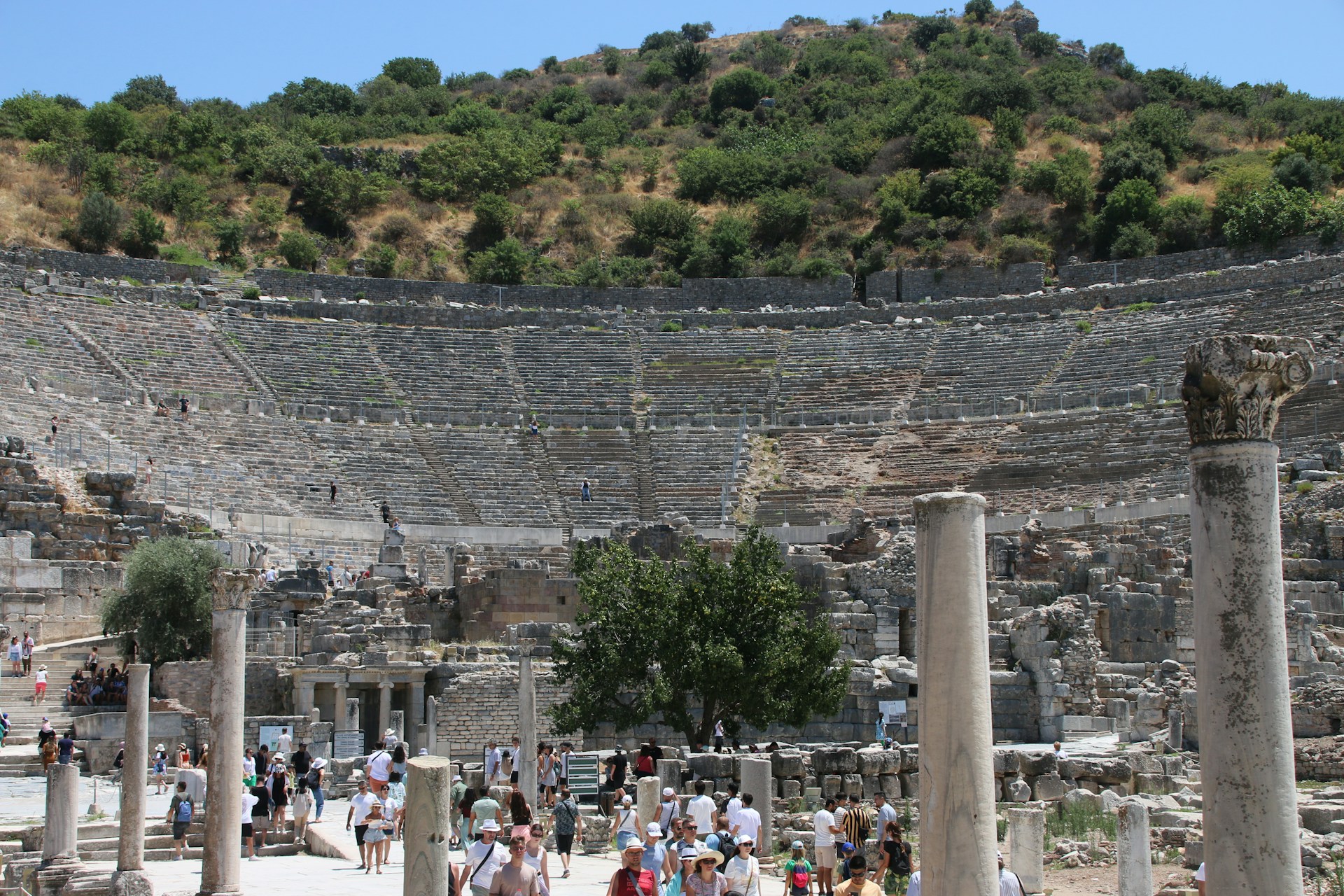
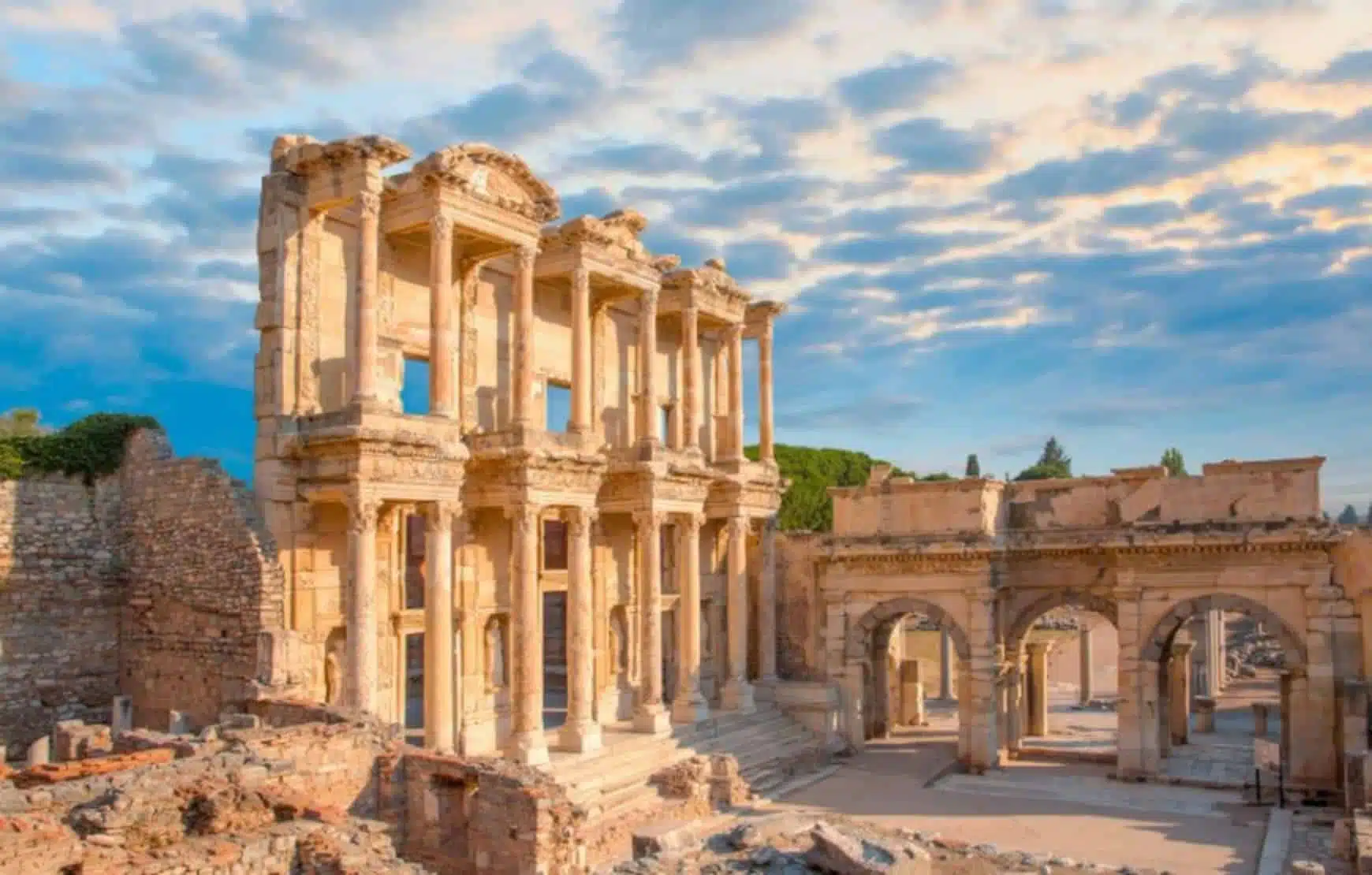
A properly paced visit to the main monuments takes 2 to 2.5 hours: the Library of Celsus, Curetes Street, the Great Theatre, the Temple of Hadrian, and the upper terrace area. What requires a separate ticket and additional time is the Terrace Houses — that does not fit a 4-hour window without compressing the site itself. The House of Virgin Mary and the Temple of Artemis also fall outside this scenario.
If Ephesus is the reason you chose this port, a 4-hour window can still deliver a focused visit to the most important structures. A well-structured private tour makes this feel comfortable rather than rushed.
6-Hour Touring Window
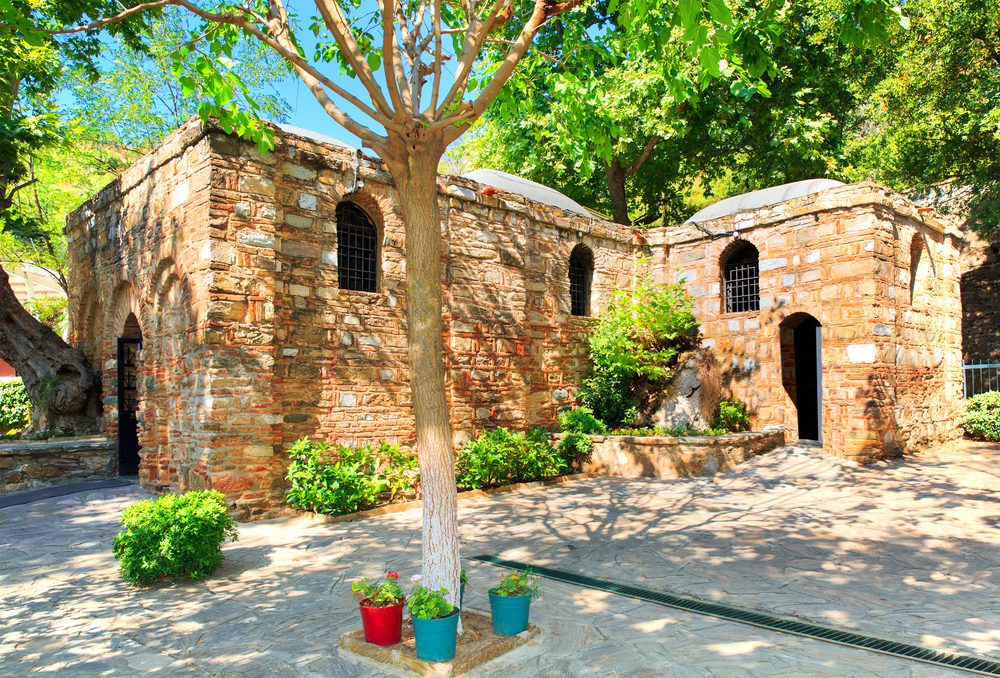
Six practical hours allow Ephesus plus one meaningful add-on. Which add-on is the right choice depends on your ship’s arrival time, how busy the site is that day, and what matters most to your group. The Terrace Houses work well for guests who want deeper archaeological context. The House of Virgin Mary is the natural choice for those with a faith-travel or historical interest in early Christianity.
What does not work within 6 hours is trying to include both. Ephesus plus Terrace Houses plus the House of Virgin Mary plus the Temple of Artemis is a full-day itinerary, not a 6-hour one. Choosing one meaningful second stop produces a substantially better experience than moving quickly through all four.
8+ Hour Touring Window
With 8 or more practical touring hours, a full Ephesus experience is realistic. The Ancient City, the House of Virgin Mary, and the Temple of Artemis as a short photo stop all fit — with time to pace the visit properly rather than move at speed.
The Terrace Houses can be added at this level for guests with a genuine interest in the residential archaeology. The separate ticket and time inside are most rewarding when that interest is there, not simply as a box to check.
More time does not mean less planning. At any port day length, the structure is built backwards from the all-aboard time — and that discipline does not change regardless of how generous the schedule looks on paper.
How Ephesian Plans Your Return
Every Ephesian cruise itinerary is built in two directions at once: forward from the ship’s arrival and backwards from the all-aboard time. The return structure is fixed before the day starts. What adjusts is everything in between.
Live ship tracking. We monitor each ship’s position as it approaches Kusadasi through real-time vessel tracking. Our team is at the port before disembarkation begins. We recommend guests come out as soon as the ship allows — not because the schedule is tight, but because the first 30 minutes after docking significantly shapes how the rest of the day unfolds.
Gate strategy — decided on the day. There is no single correct gate at Ephesus for cruise passengers. Some days the Upper Gate is the right entry point. On busier days, when multiple group tours are converging on the Upper Gate simultaneously, we shift to the Lower Gate instead — which means entering the site from the opposite end and walking it in a different direction. That decision is made based on the morning’s cruise schedule, what we observe arriving at the port, the temperature, and the profile of the group we are guiding. It is not something that can be locked in from a booking page the week before.
Return buffer and alternative routing. The return to the port is planned with a buffer built in — not added as a courtesy, but as a structural part of the itinerary. If the main coastal road into Kusadasi becomes slow, we have alternative routing options: the Selcuk–Camlik road allows us to avoid relying only on the main coastal approach. These are practical local routing options, not abstract contingency plans.
The result is not a guarantee — no responsible operator can guarantee the behaviour of traffic or a port gate queue. What we can offer is an itinerary designed with the all-aboard time as a hard constraint from the moment it is built.
Our Recommendation
If your ship docks in Kusadasi and Ephesus is on your list, the most important decision you will make is not which monuments to visit — it is when to leave the port and how much of your day you commit to the site versus everything else.
A private tour structured around your ship’s specific schedule gives you three things that matter most on a port day: a guide who knows how to read that morning’s crowd pattern, a vehicle positioned for the fastest viable return route, and an itinerary built backwards from your all-aboard time rather than optimistically forward from your arrival.
Whether you have four hours or eight, Ephesus rewards the visit. The ancient city is one of the most substantially preserved Roman sites in the Mediterranean, and time inside it — even a focused two-hour walk — is still enough to understand why Ephesus is the defining shore visit from Kusadasi.
If you are travelling as a couple or a small group, a private cruise tour typically makes practical sense on the value calculation as well. The per-person cost of a private Ephesus tour from Kusadasi Cruise Port can be a strong value once entrance fees, private pacing, and the time actually spent inside Ephesus are all considered.
For a port day planned around your ship’s timing, our Private Ephesus Tour from Kusadasi Cruise Port is the right starting point. We can adjust the itinerary to your ship’s schedule, your group’s interests, and however much time you actually have.
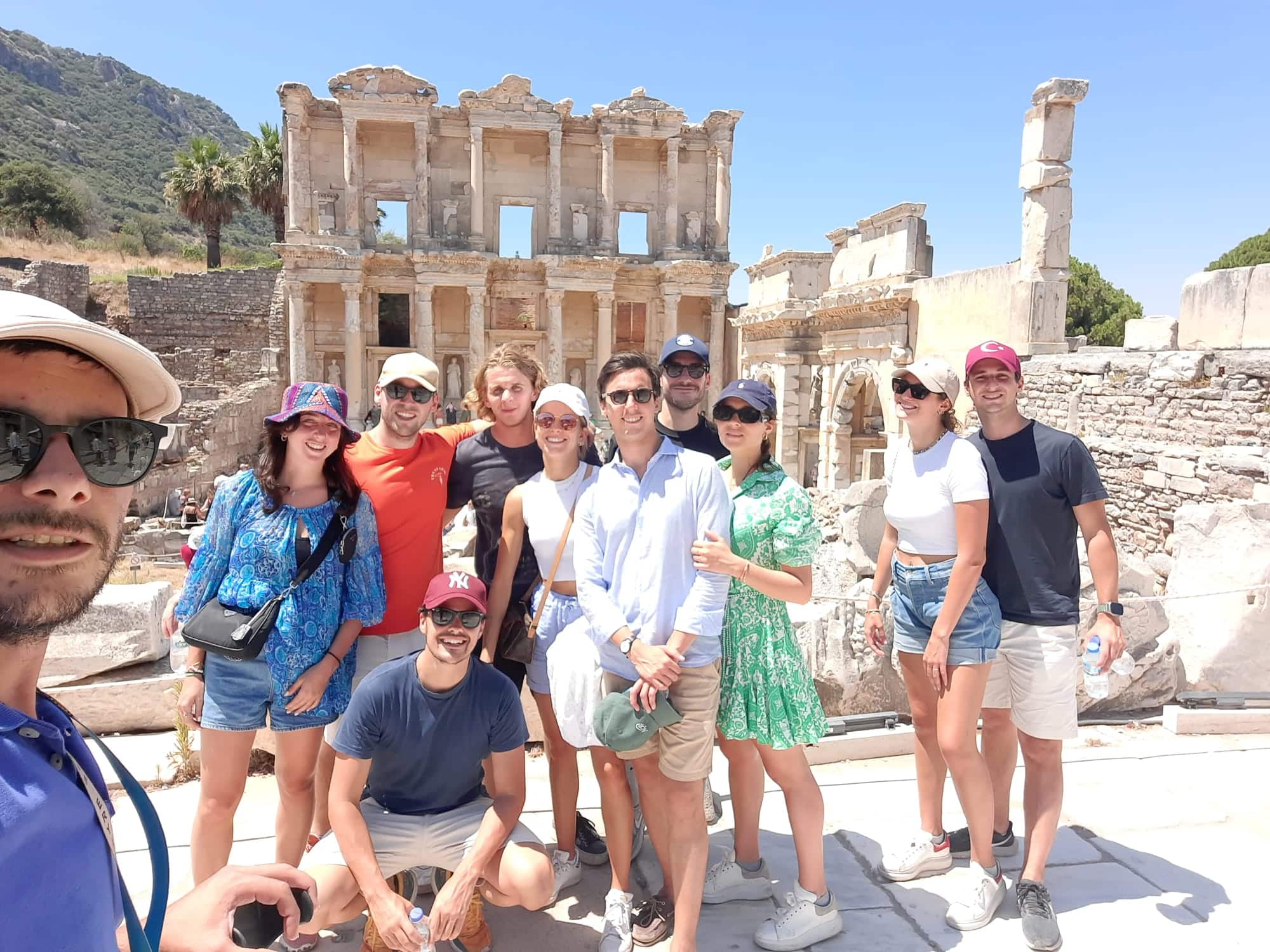
Explore Our Private Ephesus Tours

What time should I leave the port to visit Ephesus from Kusadasi?
As soon as the ship allows disembarkation. The first 30 to 45 minutes after docking are the most valuable — the site is quieter, the heat is lower, and you arrive ahead of the main cruise convoy surge. Waiting even 45 minutes at the port noticeably changes the crowd conditions at Ephesus.
Do cruise passengers need a visa to visit Ephesus?
Many cruise passengers arriving in Kusadasi for a same-day shore excursion may not need a Turkish visa, but this depends on nationality, passport, and cruise-line procedures. Requirements can change, so check your country’s current Turkey entry rules before travel and confirm with your cruise line if you plan to go independently.
Can Ephesus be done in 3 hours from a cruise ship?
Yes, with a focused plan. Three hours allows a walk through the main monuments — Library of Celsus, Curetes Street, the Great Theatre, and the Temple of Hadrian — without the Terrace Houses, House of Virgin Mary, or Temple of Artemis. A structured private tour makes a 3-hour visit feel focused rather than rushed.
What should I bring on an Ephesus port day?
Comfortable walking shoes — the marble streets are uneven and can be slippery. Sun protection and water are essential from May through October when temperatures regularly exceed 30°C. Bring small cash for the public facilities near the site entrance. Keep your ship’s all-aboard time easily accessible throughout the day.