


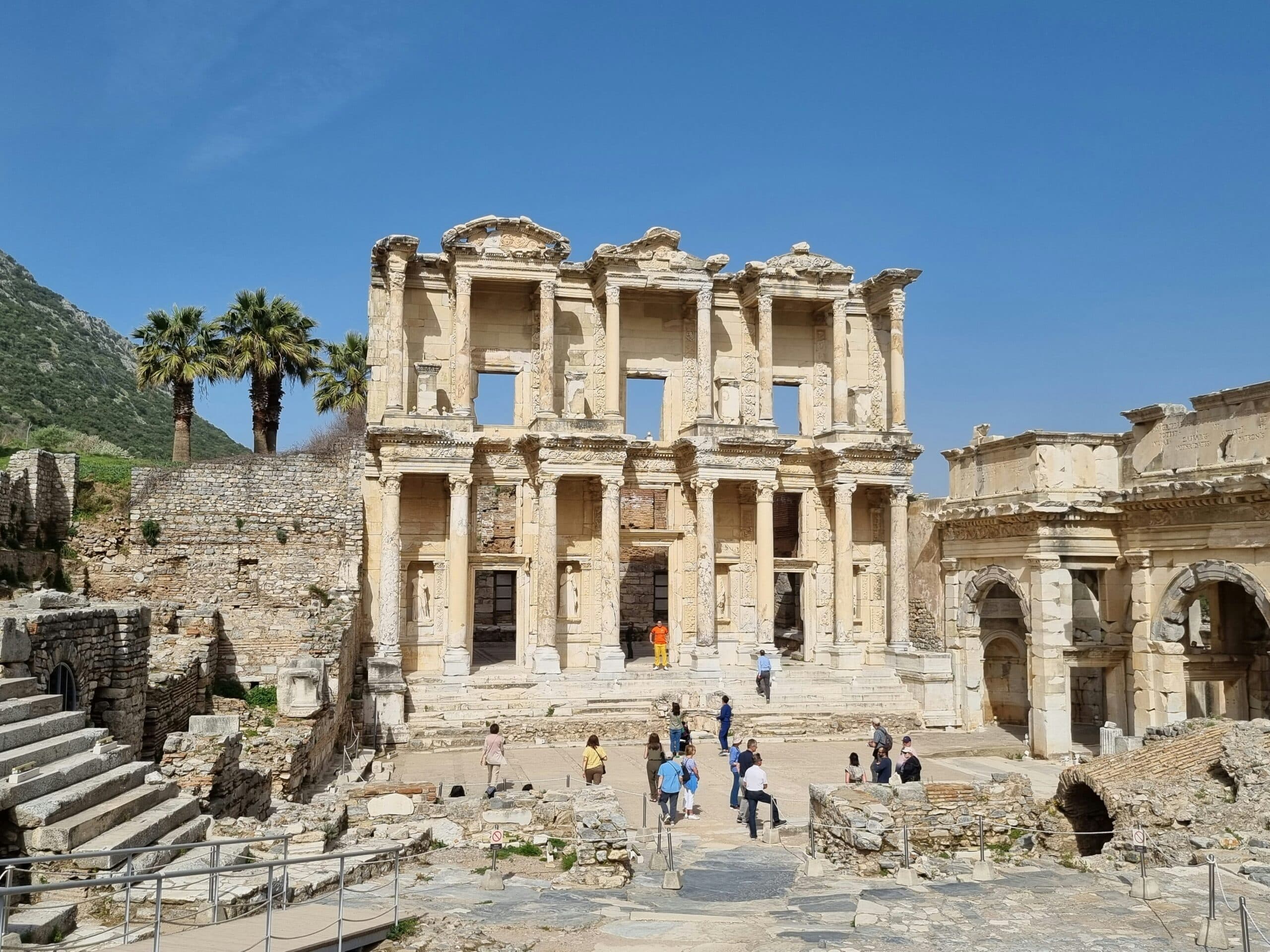
How crowded is Ephesus, and when does that crowd actually peak? This guide breaks down the daily and seasonal patterns shaping visitor density at the site, including the 09:30–11:30 cruise convoy window, the right gate for the right day, and a calibrated approach for cruise passengers, Istanbul day-trippers, and overnight guests.
How crowded is Ephesus on a typical day?
Ephesus welcomed nearly 2.7 million visitors in 2024, making it one of Turkey’s most visited archaeological sites. The actual experience of crowding depends less on total visitor numbers and more on how cruise and large group arrivals compress into the same morning window — typically between 09:30 and 11:30 on heavy days.
When are crowds worst at Ephesus?
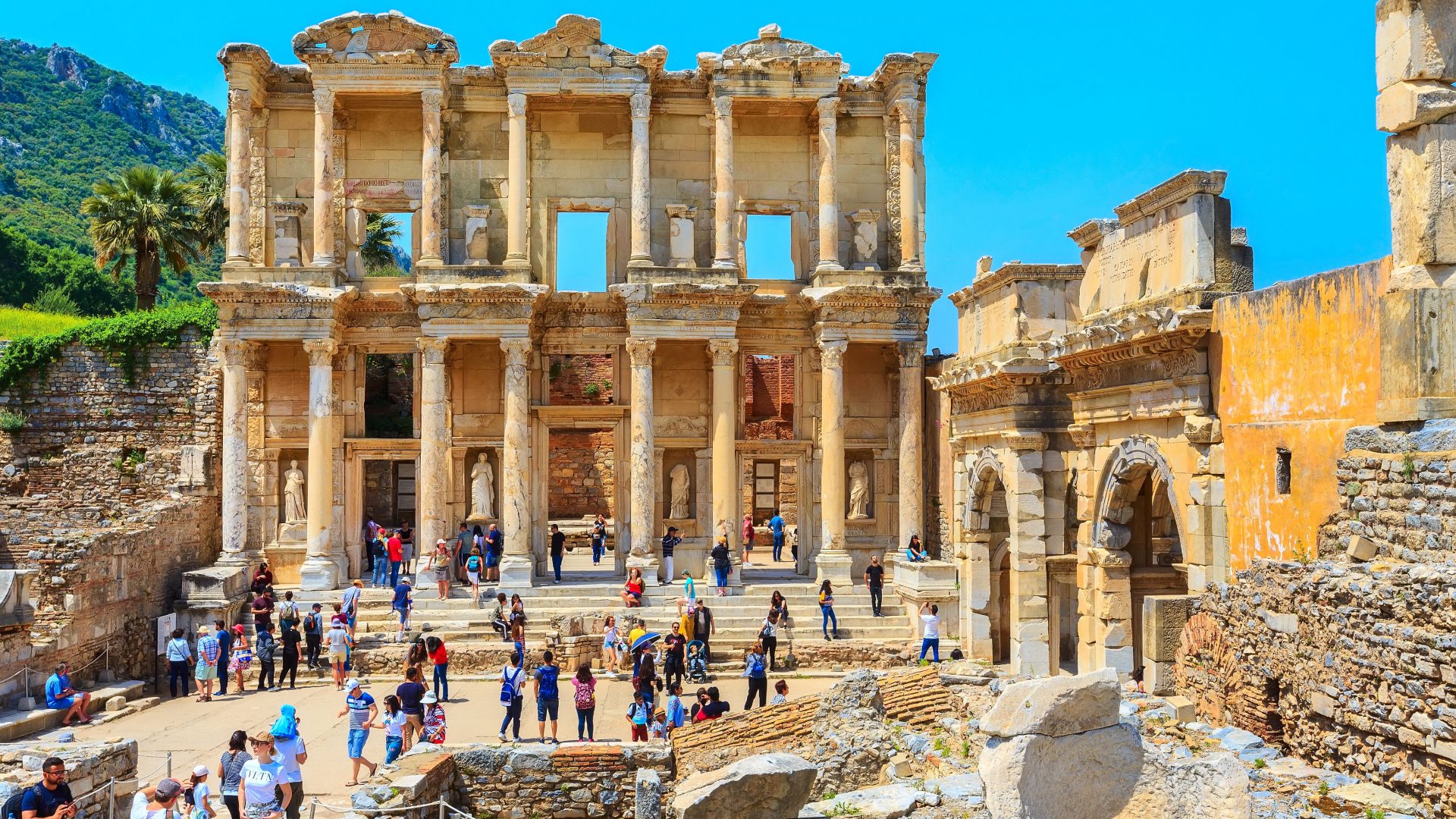
Crowd pressure peaks between 09:30 and 11:30 on heavy cruise days, when several buses arrive from Kusadasi within the same window. June through August usually brings the strongest overall visitor pressure because cruise traffic, summer holidays, and heat-sensitive scheduling overlap. The total visitor count matters less than the compression of arrivals.
What is the quietest time to visit Ephesus?
The quietest windows are before 09:30, when the site opens but cruise buses have not yet arrived, and after 16:00, when most large groups have left. A lunch dip between 12:00 and 13:30 can ease pressure on cruise days, but this depends on heat and ship schedules.
How Crowded Ephesus Actually Gets — The Real Numbers
Ephesus welcomed nearly 2.7 million visitors in 2024, reaching a reported all-time record for the site. This places Ephesus among the busiest archaeological sites in Turkey — and explains why timing matters as much as the season you choose.
Numbers like this can sound alarming when you read them as a single figure. They become useful once you understand what they actually look like inside the site. A typical Tuesday in mid-March feels nothing like a Wednesday in late July — and a Wednesday in late July with one ship in port feels nothing like the same day with four ships in port.
The point of this guide is not to convince you that Ephesus is too crowded to enjoy. It is to show you how crowd density actually behaves day by day, hour by hour, and gate by gate — so that whether you arrive by cruise, stay overnight in Selcuk, or visit as a day trip from Istanbul, you can plan your visit around the patterns rather than against them.
When Crowd Pressure Peaks (and When It Eases)
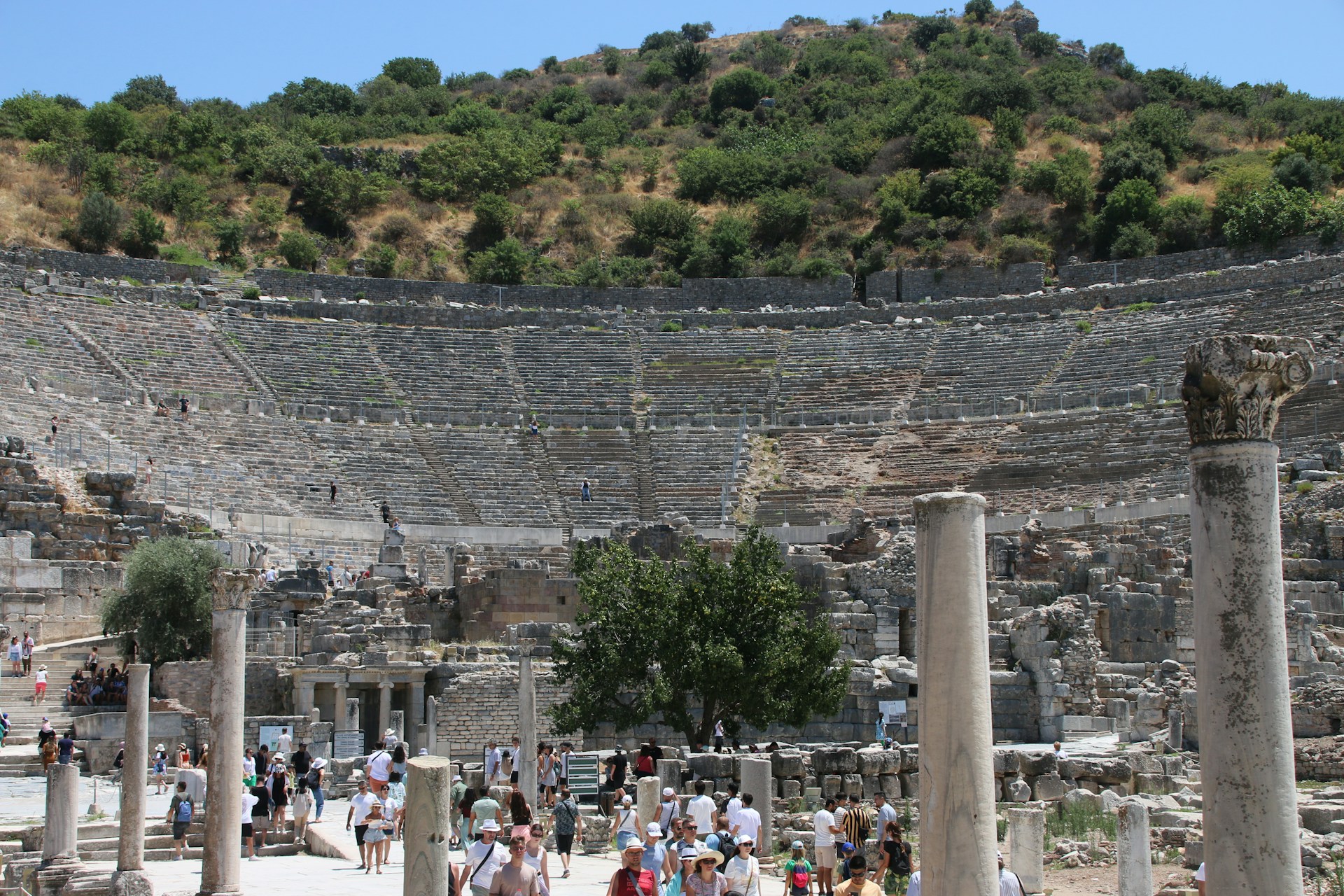
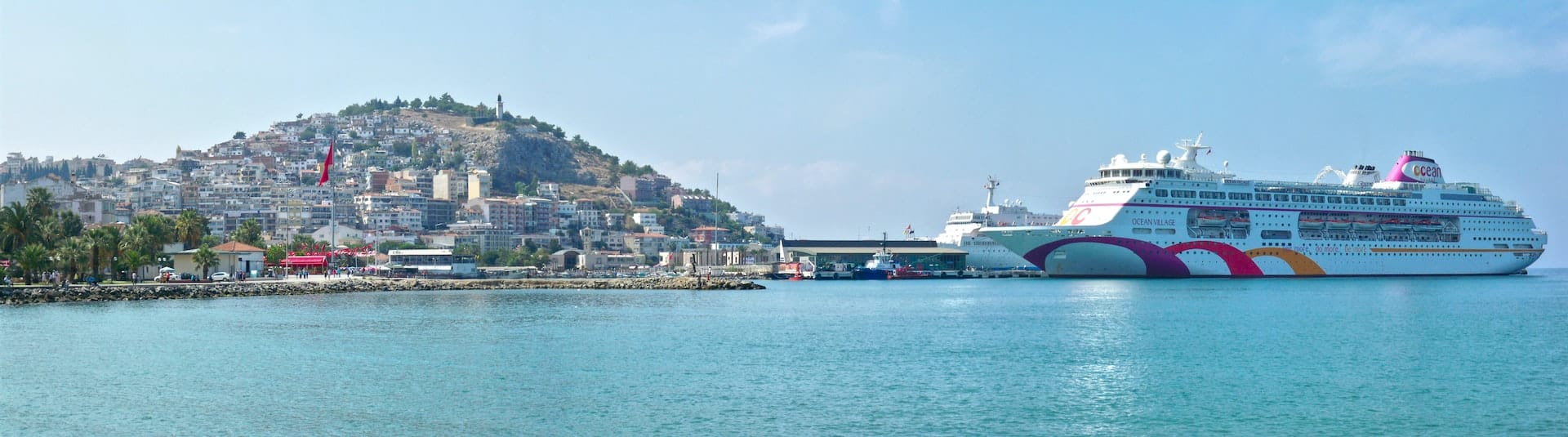
On heavy cruise days, the most concentrated arrival pressure at Ephesus falls between 09:30 and 11:30. That window is shaped by simple logistics: cruise ships dock in Kusadasi in the early morning, and it takes another 25 to 30 minutes of transfer time before many vehicles and group tours begin reaching the Upper Gate. When several ships arrive on the same morning, multiple convoys hit the gate within the same two-hour band.
This is the part most planning guides miss. The total visitor count for the day matters far less than how those arrivals are distributed across the hours. A spread-out day feels open and walkable; a day on which most of the cruise contingent enters within the same two-hour band feels nothing like the first — even when the daily total is similar.
Around midday — typically between 12:00 and 13:30 — large group tours pause for lunch. On cruise days, this can produce a visible easing in the Library of Celsus forecourt and along Curetes Street, the two areas that fill earliest in the morning. We say can because this dip depends on heat, ship turnaround schedules, and how tightly each operator sequences its day. It is a useful window when it appears, but never a guaranteed one.
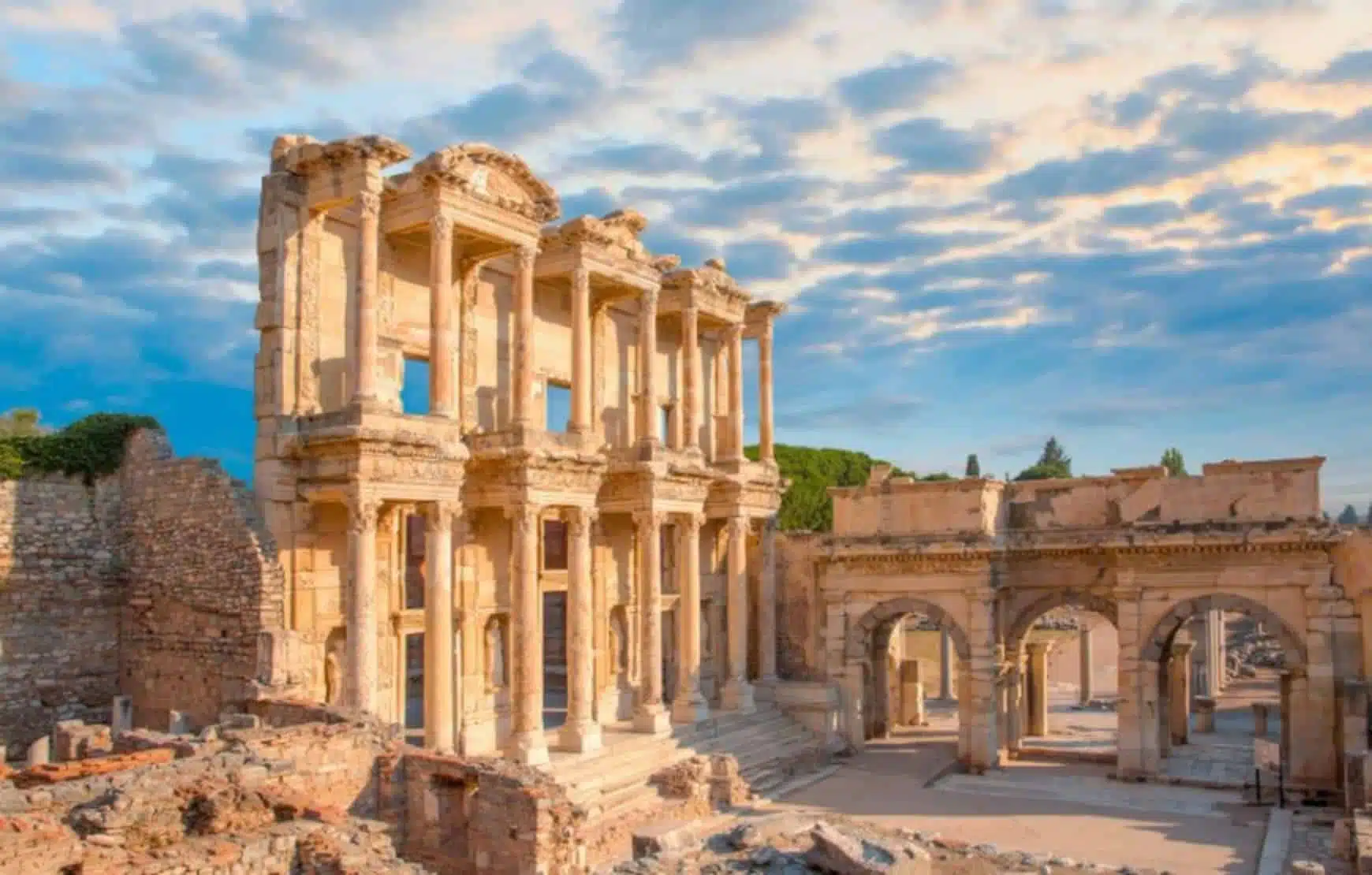
After 16:00, the rhythm changes again. Cruise passengers head back to Kusadasi to clear the ship’s all-aboard time, and large group buses return toward Selcuk and Kusadasi hotels. The site stays open until 19:00 between April and October, which leaves a long, calmer window with softer light — often the best conditions for unrushed walking and for photographing the Library of Celsus with fewer people in the frame.
How Cruise Ship Schedules Shape Your Day at Ephesus
Kusadasi is the main cruise port for Ephesus and was reported as Turkey’s leading cruise port in 2025. In 2025 alone, the port recorded 617 cruise calls and roughly 995,000 passengers — a national record. Cruise traffic is not a seasonal curiosity here; it is a structural part of how Ephesus fills.
Schedule density varies sharply from day to day. Some days have a single ship in port; others have three or four ships scheduled on the same day, often with overlapping morning arrival patterns. The day-by-day picture is publicly visible in advance — both Cruise Timetables and CruiseMapper publish the Kusadasi schedule months ahead — which means the kind of day you are booking is something you can know, not guess.
The most useful frame, though, is not how many ships are in port. It is whether the buses from those ships arrive within the same compressed 09:30 to 11:30 window. Two ships with staggered arrival times can produce an easier day than a single large ship whose entire passenger contingent is timed into one morning slot.
On heavier days, a private operator’s first task is to read that schedule before fixing a start time. Sometimes the right move is starting earlier, to enter the site before the first convoy. Sometimes it is starting later, after the morning peak has dispersed. Sometimes it is shifting the route order so that the Terrace Houses, which sit off the main flow, are visited while the main avenue and Library area are under heavier pressure.
The Best Months to Visit Without the Pressure
For travelers who want warm weather without the heaviest visitor pressure, the tightest sweet spots are usually late March to early April and late October to early November. The weather is mild, daylight is generous, and cruise traffic is lighter than in the headline shoulder months. These are the windows where the site can feel close to spacious even at midday.
May and September are popular for good reason — the weather is excellent and the light is at its best. They are also widely recommended online, which means cruise schedules and group tour calendars are full. They remain strong choices, but expect to share the site with steady crowds.
June through August is peak season. Cruise traffic, summer holidays, and heat-sensitive scheduling often overlap, and afternoon temperatures regularly cross the comfort threshold for an open-air site with little shade. Visiting in this window is still rewarding, but it asks for tighter timing — typically an early start, frequent water, and a route built around heat as much as crowds.
From November to March, Ephesus runs on shorter winter hours — 08:30 to 17:00, with ticket sales closing an hour before. Cruise and large group activity usually becomes lighter, and a clear day in this period can feel like a different site entirely. The trade-off is shorter daylight and the chance of cold or wet weather.
Night Visits — A Seasonal Alternative
According to the official 2026 night-visit schedule, Ephesus opens for evening visits from June 1 to October 1, on Wednesday through Saturday, between 19:00 and 23:00, with the night ticket office open until 22:00. Entry is through the Lower Gate only. Evenings with a scheduled concert or event are an exception — the night visit does not run those nights — and night-museum rules can change seasonally, so it is worth verifying the date before planning around it. Our full guide to visiting Ephesus at night covers the route and timing in detail.
This is best framed as a seasonal alternative, not a main recommendation. It works well for travelers staying overnight in Selcuk or in nearby Kusadasi hotels who want to add a second, quieter visit to their day. It is not a practical option for cruise passengers — by 19:00 most ships have already departed — and it rarely fits a day trip out of Istanbul. For those who can fit it in, the experience offers illuminated ruins, lower temperatures, and a very different atmosphere from the daytime route.
Upper Gate or Lower Gate? Why the Best Route Depends on the Day
Ephesus has two entrances: the Upper Gate (also called the Magnesia Gate) at the southern, elevated end of the site, and the Lower Gate (the Harbour Gate) at the northern, sea-facing end. Both lead into the same archaeological route — the difference is which direction you walk it.
For most travelers, the Upper Gate is the natural default. The site descends gradually from south to north, so entering through the Upper Gate means walking downhill past Curetes Street, the Library of Celsus, and the Great Theatre toward the lower exit. It is easier underfoot, kinder for guests with mobility considerations, and follows the most common visitor flow through the main monuments, from the upper civic areas down toward the harbour side.
The Lower Gate becomes a useful adjustment, not a universal rule, on specific days. When a cruise convoy is timed to flood the Upper Gate between 09:30 and 11:30, entering from the Lower Gate and walking against that flow can sometimes create a quieter opening stretch around the Library and Curetes Street. On a quiet midweek day in March, the same move offers no real benefit. The right call depends on the day’s traffic, not on a fixed gate rule.
This is why route choice is rarely the whole answer. Gate direction is one lever; start time is another; route order inside the site is a third. The strongest visits combine all three, calibrated to the actual schedule of that morning. For a complete look at how this crowd intelligence shapes a private day from start to finish, see our Ephesus for luxury travelers guide.
A more detailed look at the gates and their facilities is covered in our guide to the entrance gates of Ephesus.
Timing by Traveler Type
There is no single “best time” to visit Ephesus, because the right time depends on the constraints you are actually working within. A cruise passenger, an Istanbul day-tripper, and a guest staying overnight in the region are solving three completely different problems. The table below sets out a calibrated approach for each.
Christian travelers and Seven Churches pilgrims add a fourth timing layer — chapel rhythm at the House of the Virgin Mary and the pace of the broader pilgrimage route. Our Ephesus for Christian travelers guide handles these timings alongside the gate-and-crowd advice on this page.”
| Traveler Type | Constraint Reality | Suggested Timing Strategy |
|---|---|---|
| Cruise passenger from Kusadasi | Ship dock and all-aboard window; 25–30 minutes transfer each way; little flexibility on the day. | Start the visit as soon as logistics allow after the ship docks, ideally before the 09:30–11:30 convoy peak. Build in a clear buffer before the all-aboard time on the return. |
| Istanbul day-tripper | Morning flight to Izmir ADB Airport, transfer to Ephesus, and an evening return; the site window is compressed into the middle of the day. | If an early flight allows, target a pre-09:30 arrival. Otherwise, aim for an early-afternoon entry, once the morning convoy has dispersed. |
| Overnight in Selcuk or Kusadasi | More flexible — full-day planning freedom, with the option of a second visit on a separate day. | Maximum freedom. Choose either the pre-09:30 morning window or the after-16:00 late-afternoon window, based on the published cruise schedule for the chosen date. |
The clearest pattern across all three: the more flexibility you have on the day, the more value timing intelligence provides. Cruise passengers benefit from a tightly planned start time; overnight guests benefit from being able to skip the busiest hours entirely. A deeper look at the trade-offs across private, group, and self-guided approaches is in our guide to the best way to visit Ephesus.
Our Recommendation — A Timing-Sensitive Private Visit
What a private visit actually does for crowd density at Ephesus is not magic, and it is not a shortcut. It is calibration. Reading the day’s cruise schedule, picking a start time that fits the convoy pattern, choosing the right gate for that day, and adjusting the route order around the busiest moments — these are operational choices that shape the experience far more than any marketing line about “skipping the crowds.”
For a cruise passenger, that calibration usually means starting as soon as logistics allow after the ship docks, with a route built around the all-aboard time. For an Istanbul day-tripper, it means an arrival angled to land just before or just after the morning convoy peak, depending on the flight schedule. For a guest staying overnight in Selcuk or Kusadasi, it means using the morning sweet spot before 09:30 — or the post-16:00 ease — and skipping the busiest two hours entirely.
The two private tours below are the formats most directly built around this kind of calibration. The Kusadasi cruise port tour is shaped by ship arrival and all-aboard timing; the Selcuk-based private tour is shaped by the full flexibility of an overnight stay. Either way, the value comes from the timing and routing decisions made for that specific day.

Explore Our Private Ephesus Tours

Is there a daily visitor cap at Ephesus?
For regular visitors, Ephesus does not usually function like a timed-entry museum where the main experience is controlled by a fixed daily quota. In practical terms, crowding is shaped more by the timing of cruise and large group arrivals — especially the morning convoy window — than by expecting a numerical cap to thin the site.
Should I enter from the Upper Gate or the Lower Gate?
For most travelers, the Upper Gate is the natural default, because the site descends from south to north and the route is easier walked downhill. The Lower Gate becomes a useful adjustment on heavy cruise mornings, when entering against the convoy flow can sometimes create a quieter opening stretch around the Library and Curetes Street. The right call depends on the day.
How long does it take to walk through Ephesus?
A standard walk through the main route from Upper Gate to Lower Gate takes roughly two to three hours, with stops at the Library of Celsus, the Great Theatre, and Curetes Street. Adding the Terrace Houses extends the visit by another 45 to 60 minutes. Walking pace, heat, and how long you linger at each monument all shift the actual timing.
Are cruise passengers always rushed at Ephesus?
Cruise passengers work within a fixed window, but a rushed visit is not inevitable. With a 25–30 minute transfer from Kusadasi and a calibrated start time matched to ship arrival, most cruise itineraries fit the main route comfortably. The pressure usually comes from late starts, tight return planning, or schedules that were not read carefully in advance — not simply from the port time itself.