


Most travelers assume all Ephesus tours are similar. They are not. This page explains the real difference between private tours, cruise ship group excursions, and visiting on your own — including two comparison tables, operator-level logistics, and an honest breakdown of who should book private and who does not need to.
What is the difference between a private Ephesus tour and a group tour?
A private Ephesus tour is organized only for your party, with a licensed guide and private vehicle, while a group tour is shared with 30–45 people on a fixed schedule and route. The main difference is flexibility, pace, and personal attention — private tours follow your schedule, not the group’s.
Is a private Ephesus tour worth the extra cost?
Yes, for many travelers it is worth it because a private tour saves time, avoids large groups, and allows a flexible itinerary. It is especially valuable for cruise passengers, families, senior travelers, and first-time visitors who want a more comfortable and informative visit.
Can I just hire a guide at the Ephesus entrance gate?
Yes, but hiring a guide at the gate only provides guiding inside the site. It does not include transportation, port pick-up, route planning, or timing management. A private tour includes the full organization of the day, not just guiding.
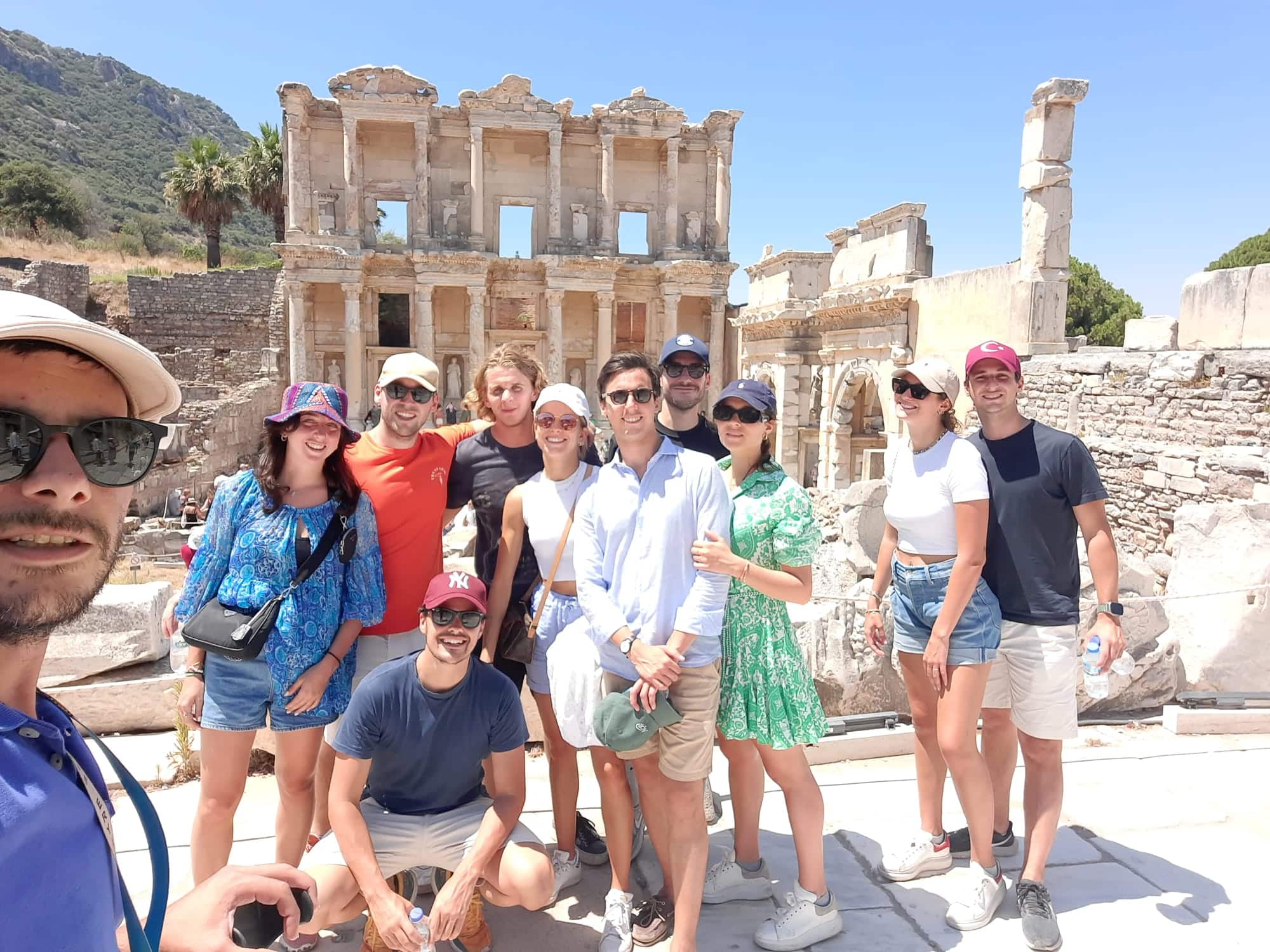
The Three Ways to Visit Ephesus
Not all Ephesus tours are the same — and the difference is more than price. Whether you arrive by cruise ship, fly into Izmir, or drive from Istanbul, you have three fundamental options for how you experience one of the ancient world’s most significant cities — each covered in depth in our guide to the best way to visit Ephesus. Each comes with a different level of organization, depth, and flexibility. Understanding the difference helps you choose the right one for your trip.
Most travelers visiting Ephesus Ancient City choose one of three approaches: a cruise ship group excursion, a private tour booked through a local operator, or an independent self-guided visit. Here is how they compare across the details that actually matter on the day.
| Feature | Private Tour | Group Tour | Visiting On Your Own |
|---|---|---|---|
| Pick-up | From port or hotel | Fixed meeting point | You arrange |
| Start time | Flexible | Fixed | Flexible |
| Group size | Just your party | 30–45 people | Just you |
| Licensed guide | Yes | Yes | No |
| Route | Adjustable | Fixed | Your choice |
| Terrace Houses | Optional, decided on the day | Often skipped | Extra planning required |
| Time at Ephesus | 2–3 hours | 1.5–2 hours | Flexible |
| Lunch | Flexible | Pre-set | Your choice |
| Shopping stops | Optional | Often yes | Your choice |
| Price | Higher | Medium | Lowest |
| Experience depth | High | Medium | Low without a guide |
What Happens on a Cruise Ship Group Excursion
Ephesus attracted 2.7 million visitors in 2024 — a record. A significant portion arrive by cruise ship through Kusadasi port, roughly 20 to 30 minutes from the ancient city. For those passengers, the default option is the ship’s organized group excursion. Here is what that typically looks like in practice.
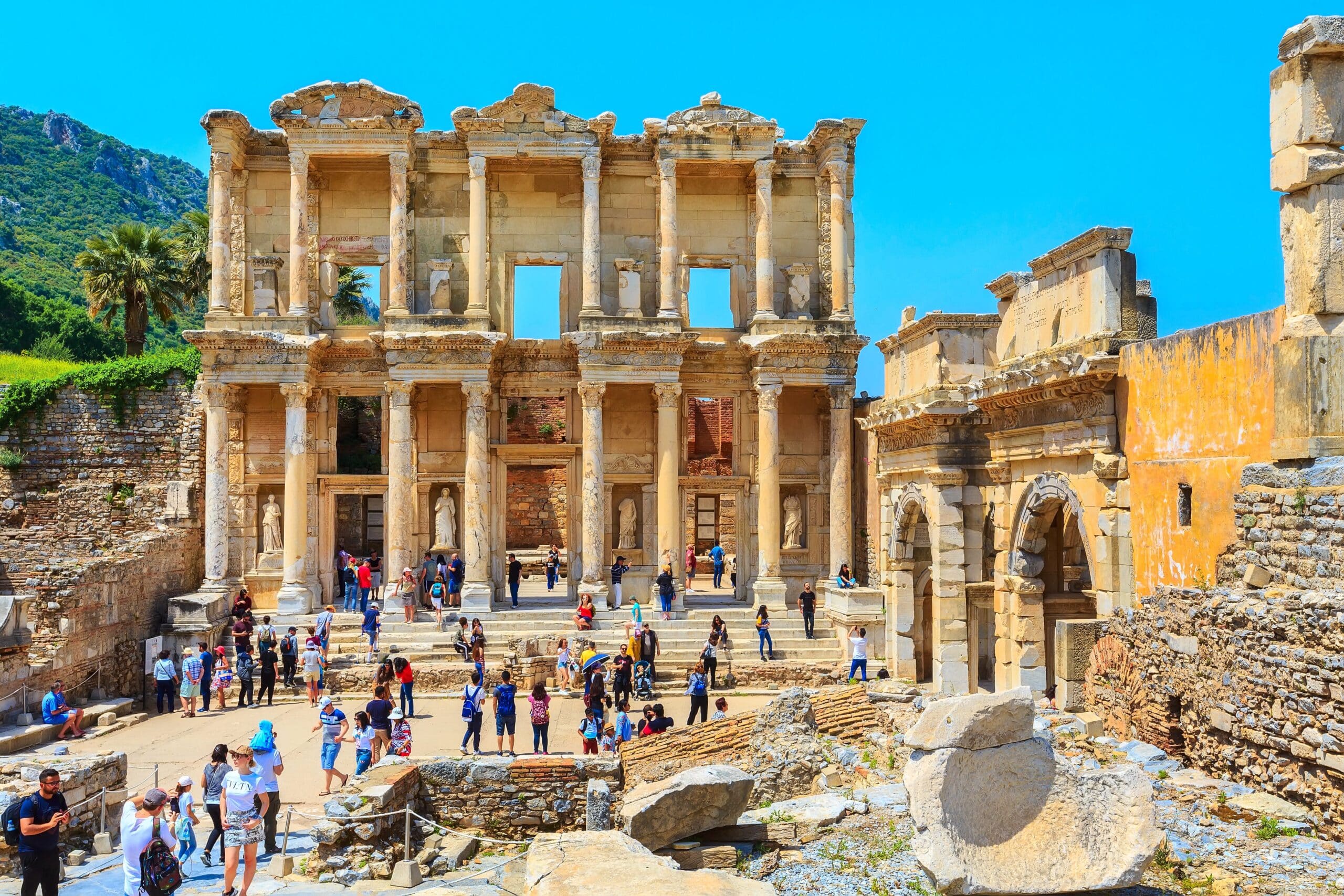
Cruise excursion buses carry between 40 and 45 passengers. Even with a whisper audio device, hearing the guide clearly while walking through Marble Street or standing in front of the Celsus Library alongside hundreds of other visitors is difficult. The guide sets the pace — which must work for everyone, including those who want to move faster and those who need to slow down. Senior travelers, in particular, often find the tempo demanding.
The route is fixed. Most cruise excursions enter through the Upper Gate and exit through the Lower Gate, covering the main street in approximately 1.5 to 2 hours. The Terrace Houses — the most archaeologically detailed section of the site, requiring a separate ticket — are almost always skipped. A shopping stop at a carpet or leather cooperative is standard and often non-optional. If the ship arrives late or departs early, the time at the site is cut accordingly.
What a Private Tour Actually Changes
The word “private” gets used loosely in travel. What it means in practice at Ephesus is this: your guide is waiting at the cruise port with a sign bearing your name. Before you reach the site, the guiding has already started — in the vehicle, covering the region’s history, the layout of the ancient city, and what to expect at each stop. By the time you step through the gate, you have context that most group tour visitors never receive.
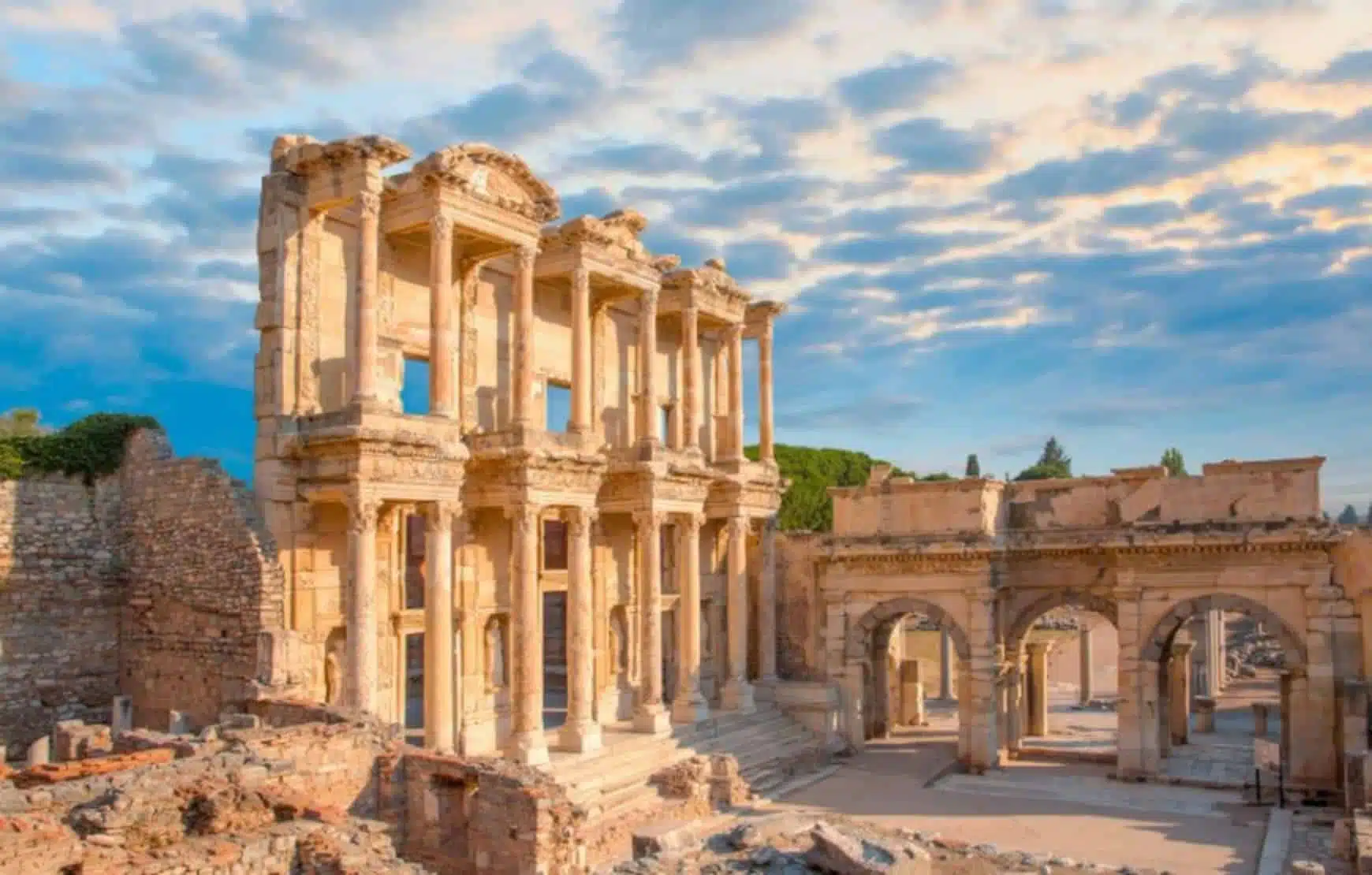
The standard routing strategy enters through the Upper Gate (Magnesia Gate) and walks downhill toward the Lower Gate. This is not arbitrary — it is the correct chronological and physical approach to the site. Walking downhill through Curetes Street, past the Temple of Hadrian, the Trajan Fountain, and down to the Celsus Library and Great Theatre is both less physically demanding and architecturally coherent. In peak season, when the site is densely crowded, the routing can be reversed — Lower Gate to Upper Gate — to avoid the main bottlenecks. That call is made on the day, based on actual conditions.
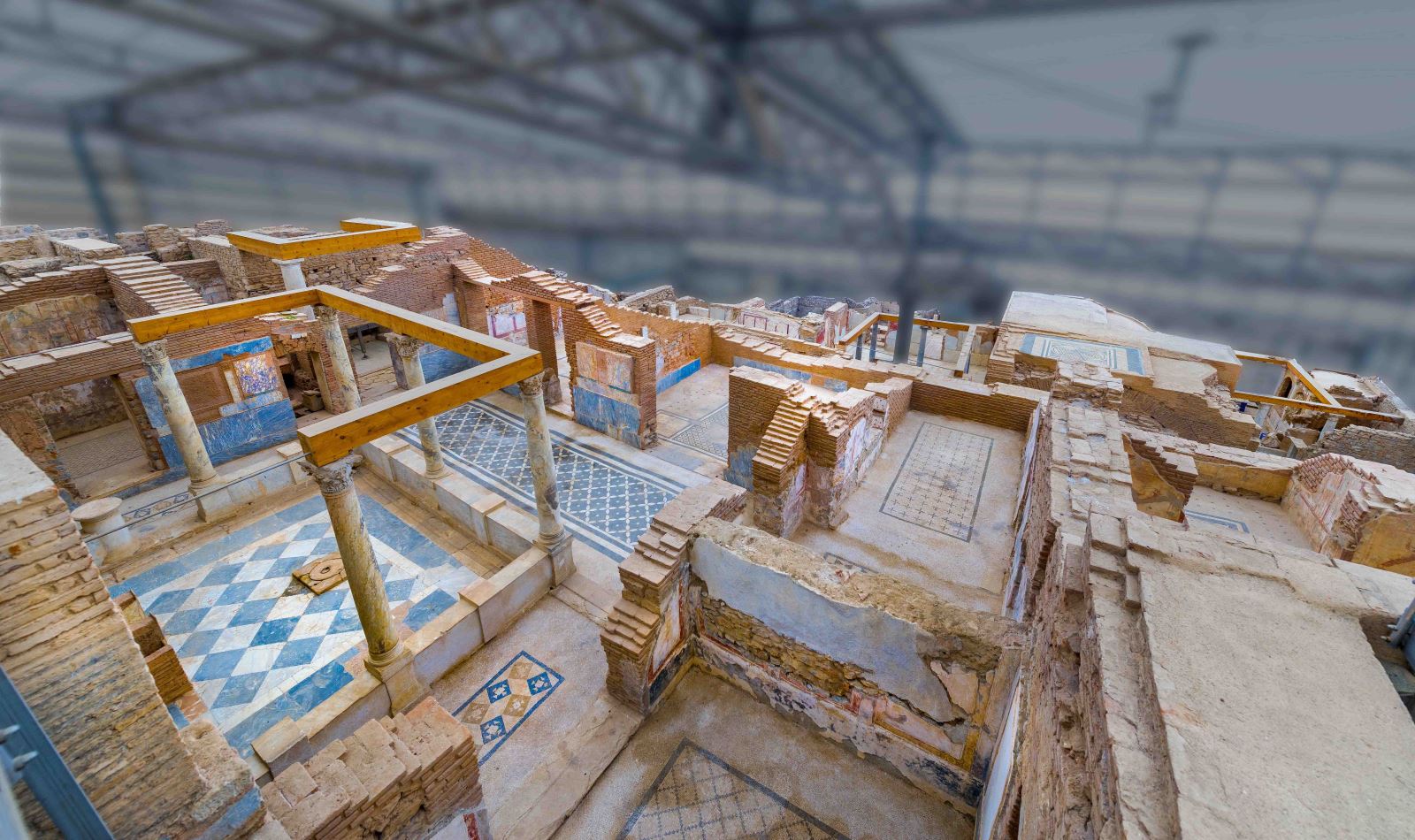
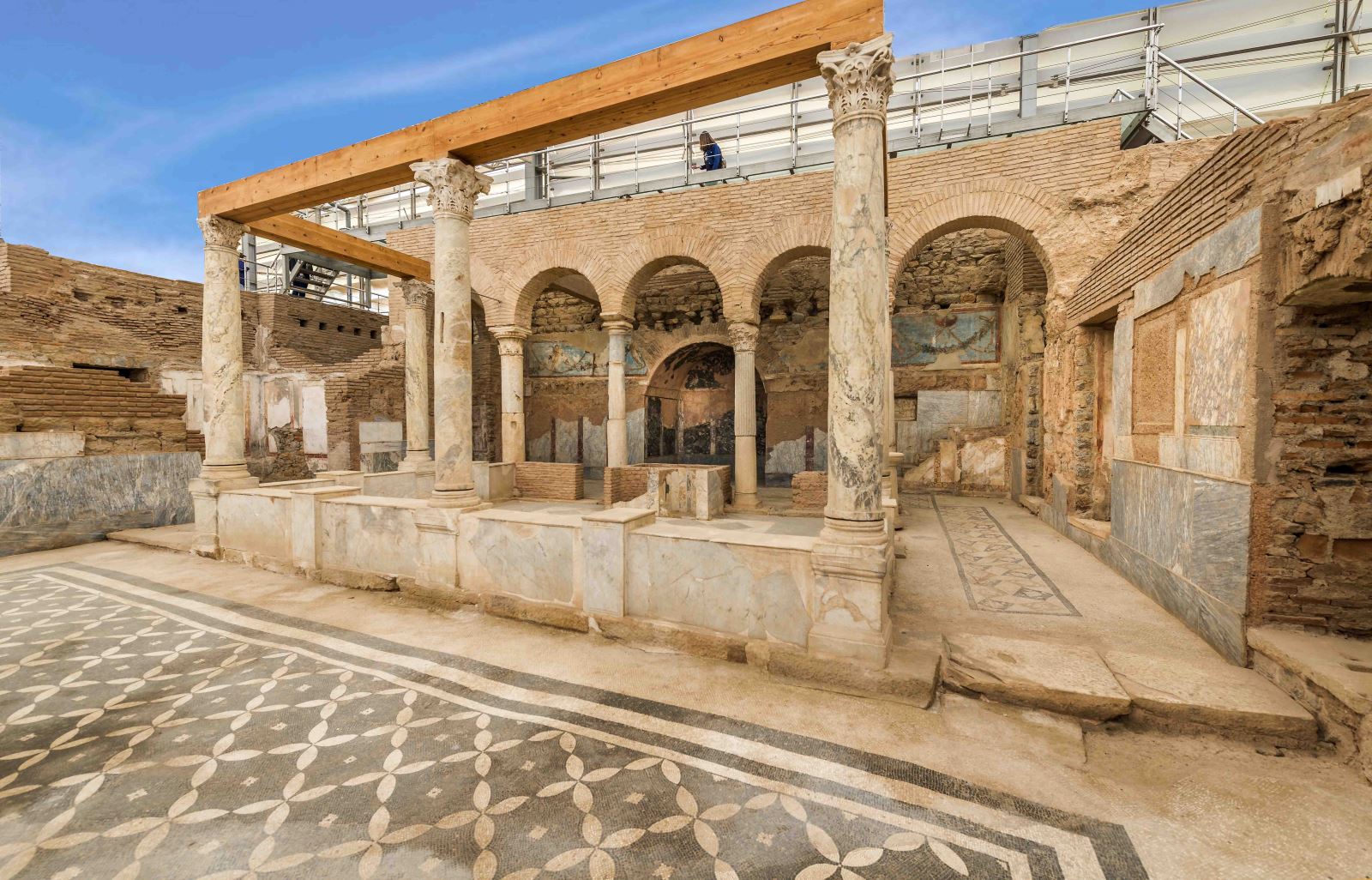
The Terrace Houses — the covered excavation site on the slopes of Bulbul Mountain showing how Ephesus’s wealthiest residents lived, complete with original mosaics, frescoes, and underfloor heating systems — require a separate entrance ticket and are rarely included in cruise ship excursions. On a private tour, the decision is made with your guide based on your interests and available time. For travelers with a genuine interest in Roman daily life, early Christian history, or archaeology, they are worth every minute. The Ephesus Archaeological Museum in Selcuk is an additional option for those who want to go deeper still.
In summer, the white marble surfaces of Marble Street reflect heat intensely — the perceived temperature at the site can run several degrees higher than the surrounding area. Starting early, before the main cruise ship crowds arrive and before the midday sun peaks, makes a measurable difference to the quality of the visit. On a private tour, your start time is planned around these realities. Your return time is matched to your ship’s departure, with sufficient buffer built in — not the minimum.
Private Tour vs. Hiring a Guide at the Gate
A common question from independent travelers: why book a private tour in advance when guides are available for hire at the Ephesus entrance? The answer is in what the service actually includes. A guide hired at the gate provides guiding inside the archaeological site — nothing more. A private tour booked through a licensed local operator is a fully organized day.
| Hiring a Guide at the Gate | Booking a Private Tour | |
|---|---|---|
| Transportation | Not included — you arrange | Private vehicle included |
| Pick-up | No — you get to the site yourself | From cruise port or hotel |
| Guiding start | At the site entrance | From the moment you leave the port |
| Route planning | Standard route only | Adjusted to your interests and time |
| Terrace Houses | Not pre-planned | Discussed and arranged in advance |
| Lunch | Not arranged | Flexible, arranged by operator |
| Return timing | Your responsibility | Matched to ship departure |
| Operator accountability | None | Licensed local DMC |
Gate guides at Ephesus can be knowledgeable and licensed — but the service begins and ends at the site. If you are arriving independently from Selcuk with a full day and no ship to catch, hiring at the gate is a viable option. If you are a cruise passenger with a fixed departure window, a family with logistics to manage, or a traveler who wants the House of the Virgin Mary and the Basilica of St. John included, a pre-booked private tour is the correct choice.
Is a Private Ephesus Tour Worth It?
| If this sounds like you | Private tour makes sense |
|---|---|
| Arriving by cruise ship | ✓ |
| First time in Turkey | ✓ |
| Traveling with family or children | ✓ |
| Senior traveler or limited mobility | ✓ |
| Limited time at the destination | ✓ |
| Biblical or faith-focused visit | ✓ |
| Want to include the Terrace Houses | ✓ |
| Budget traveler, flexible on schedule | ✗ |
| Backpacker with several days in Selcuk | ✗ |
| Returning visitor, know the site already | ✗ |
| Quick stop, no deep interest in history | ✗ |
The honest answer is: it depends on what you want from the visit. A private tour is not the right choice for every traveler — and saying so is more useful than overselling it.
Private tours are particularly well suited for:
- Cruise passengers with a fixed departure window who cannot afford to miss the ship
- Families with children who need a flexible pace and the freedom to stop when needed
- Senior travelers for whom a 40-person group moving at a guide’s pace is physically demanding
- First-time visitors to Turkey who want context, not just a checklist of ruins
- Biblical and faith travelers for whom the House of the Virgin Mary, the Basilica of St. John, and the early Christian history of Ephesus are central to the visit
- Photography travelers who want to pause, reframe, and wait for the light at the Celsus Library without a group moving around them
- History enthusiasts who want to include the Terrace Houses and the Ephesus Archaeological Museum in Selcuk
A private tour is probably not necessary if:
- You are traveling on a tight budget and a general overview of the site is sufficient
- You are an independent backpacker with multiple days in the Selcuk area and no time pressure
- You have already visited Ephesus and are returning for a specific detail or area
- The visit is incidental — a quick stop rather than a primary destination
Ephesus rewards depth. The site covers a significant area, only around 20% of which has been excavated. A visit with a knowledgeable guide who knows which details to pause on — the footprint carved into the marble on Curetes Street, the acoustics of the Great Theatre, the heating system visible inside the Terrace Houses — is a fundamentally different experience from walking the same route with a map.
Our Recommendation
If you are visiting Ephesus once — whether as a cruise passenger with a single day in Kusadasi or as a traveler who has built this site into a longer Turkey itinerary — a private tour with a licensed local operator gives you the best return on the time you have. Ephesus is large, layered, and genuinely rewards depth. A knowledgeable guide who starts the day in the vehicle, adjusts the route to actual site conditions, and plans the return around your departure window changes what the visit is.
To see what a well-designed private day actually looks like — timing, vehicle, Terrace Houses, and how to extend without overloading — read our Ephesus for luxury travelers guide.
If you are interested in the full picture — the Terrace Houses, the House of the Virgin Mary, the Basilica of St. John, and the context that connects them — discuss your itinerary with us before you book. We are based in Selcuk, three kilometers from the site, and we organize private Ephesus tours year-round. We will tell you honestly what is realistic for your available time and what to prioritize.
Explore Our Private Ephesus Tours

How long does a private Ephesus tour take?
A standard private Ephesus tour covering the ancient city and the House of the Virgin Mary takes approximately 4 to 5 hours. Adding the Terrace Houses extends this by 45 to 60 minutes. Adding the Basilica of St. John or the Ephesus Archaeological Museum in Selcuk makes it a full-day visit. On a private tour, the duration is adjusted to your available time — cruise passengers with a short port window can complete a focused visit in 3 hours.
Is Ephesus suitable for senior travelers on a private tour?
Yes. On a private tour, the pace is set by your group. Seniors who need a slower walk, more frequent rest stops, or extra time at specific sites are accommodated without any pressure. The standard Upper Gate to Lower Gate route is downhill, which makes it physically manageable for most travelers. Your guide will advise on terrain and plan the visit accordingly.
What is the difference between the Upper Gate and Lower Gate at Ephesus?
The Upper Gate (Magnesia Gate) is the south entrance, where most guided tours begin. Entering here allows you to walk downhill through the ancient city — a more comfortable route, particularly in summer heat. The Lower Gate at the north end is near the main parking area and is where most visits conclude. In peak season, when crowds concentrate at the Upper Gate, an experienced local guide may reverse the route for a better experience.
Are the Ephesus Terrace Houses worth visiting?
For travelers with an interest in Roman daily life, mosaics, frescoes, or early Christian history, the Terrace Houses are absolutely worth the separate entrance fee. They show how Ephesus’s wealthiest residents actually lived — a level of detail not visible anywhere else on the site. Travelers on a tight schedule or with a general interest in the ruins can skip them. On a private tour, your guide will help you make that call based on your time and interests.